
Valued at $680.23 billion in 2025, the global sports tourism market is projected to increase from $721.60 billion in 2026 to $957.91 billion by 2031, according to a new report issued by Research and Markets.
The market is expected to register a compound annual growth rate (CAGR) of 6.09% during the 2026-2031 forecast period, supported by international sporting events, premium hospitality packages, active participation travel and expanding sports infrastructure.
International sporting events strengthen travel demand
A growing pipeline of international tournaments is creating sustained demand across the global sports tourism market. After co-hosting the FIFA World Cup in 2026, the United States is preparing to host major events such as the FIFA World Cup 2026 and the LA28 Olympic and Paralympic Games, alongside future rugby and winter sports competitions.
Japan is also using the 2026 Asian Games in Aichi-Nagoya and the 2027 World Masters Games Kansai to increase inbound travel and strengthen regional tourism.
Major sporting events generate economic benefits extending beyond ticket revenue. Host destinations experience increased demand for hotels, flights, restaurants, local transportation and entertainment. Multi-city tournaments can also encourage longer stays, repeat visits and travel between venues, supporting tourism activity across neighboring regions.
Premium hospitality and official travel packages expand
Official ticketing, travel and hospitality packages are becoming increasingly important within the sports tourism industry. TKO Group Holdings’ acquisition of IMG, On Location and Professional Bull Riders highlights the rising commercial value of integrated live-event experiences. On Location provides hospitality services for more than 1,200 sporting events and works with more than 150 rights holders, including FIFA, the International Olympic Committee, the NFL, UFC, WWE and PGA of America.
Liberty Media’s acquisition of Quint further demonstrates demand for premium sports travel. Quint offers official ticket and hospitality packages for more than 90 events and maintains over 15 official property partnerships. Its appointment as the official hospitality sales partner for the Formula 1 Heineken Silver Las Vegas Grand Prix reflects closer cooperation among event owners, travel providers and hospitality specialists.
Security and geopolitical risks remain key challenges
Geopolitical tensions, security concerns, regulatory changes and event cancellations present significant risks to sports tourism growth. The industry relies heavily on fixed schedules, large gatherings and prepaid travel arrangements. When events are postponed or canceled, the financial impact can affect airlines, accommodation providers, transportation operators, restaurants and local businesses.
High long-haul travel costs and expensive event-access bundles may also limit market participation. Other influential trends include AI-enabled travel planning and ticketing, personalised itineraries, and increasing interest in sports heritage and nostalgia-based travel.
Spectator tourism leads while active participation accelerates
Spectator and event tourism represented 52.52% of the global sports tourism market in 2025, making it the largest tourism segment. Demand is supported by recurring leagues, international tournaments, stadium visits and major sports properties. Sports ETA reported $51.1 billion in direct spending from spectator sports tourism in the United States during 2025.
Active participation tourism is forecast to grow at a CAGR of 7.12% between 2026 and 2031. Destination marathons, cycling tours, sailing, skiing and training camps are attracting amateur athletes, youth teams and recreational participants. In 2025, participatory sports tourism generated $60.1 billion in direct spending in the United States, supported by 227.6 million domestic travellers.
Football maintains market leadership
Football tourism accounted for 19.73% of global sports tourism revenue in 2025, maintaining its position as the largest sports category. Domestic leagues, club competitions, continental tournaments and global events convert extensive fan engagement into domestic and international travel demand. Cricket, golf, rugby, cycling, adventure sports and water sports also contribute to regional tourism growth and market diversification.
Marathon and endurance sports tourism is expected to record the fastest category growth, with a projected CAGR of 7.94% from 2026 to 2031. World Athletics’ plan to launch a standalone World Marathon Championships in 2030, with Athens identified as the preferred inaugural host, could further combine event participation, sports heritage and destination branding.
Europe holds the largest regional share
Europe accounted for 33.75% of the global sports tourism market in 2025. Its leadership is supported by established event infrastructure, cross-border mobility, prominent leagues and extensive sports heritage. A diverse calendar of football, rugby, cycling, motorsport, tennis and endurance events supports year-round tourism activity and spending across accommodation, food services and transportation.
North America remains a major sports travel corridor. The United States sports tourism economy reached $274.5 billion in 2025 and attracted 339 million sports travellers. South American demand remains closely connected to football competitions, national team events and emerging adventure tourism opportunities.
Asia-Pacific is projected to be the fastest-growing regional market, registering a CAGR of 8.15% from 2026 to 2031. Japan is promoting golf, skiing and international events, while China continues to develop its sports economy. India’s cricket-driven travel market and investments such as Seoul’s Jamsil Sports and MICE Park provide additional growth potential. Saudi Arabia’s Vision 2030 is also advancing sports-led tourism through infrastructure investment, sustainability initiatives and public-private partnerships.
See more at researchandmarkets.com
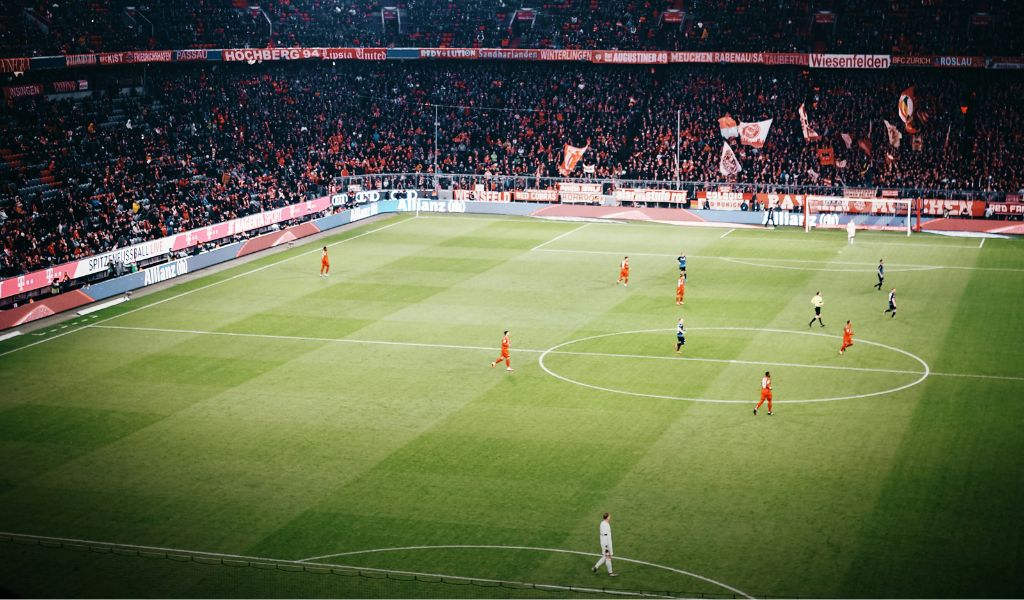
Image: Allianz Arena in Munich, Germany (Photo by dominik hofbauer on Unsplash)