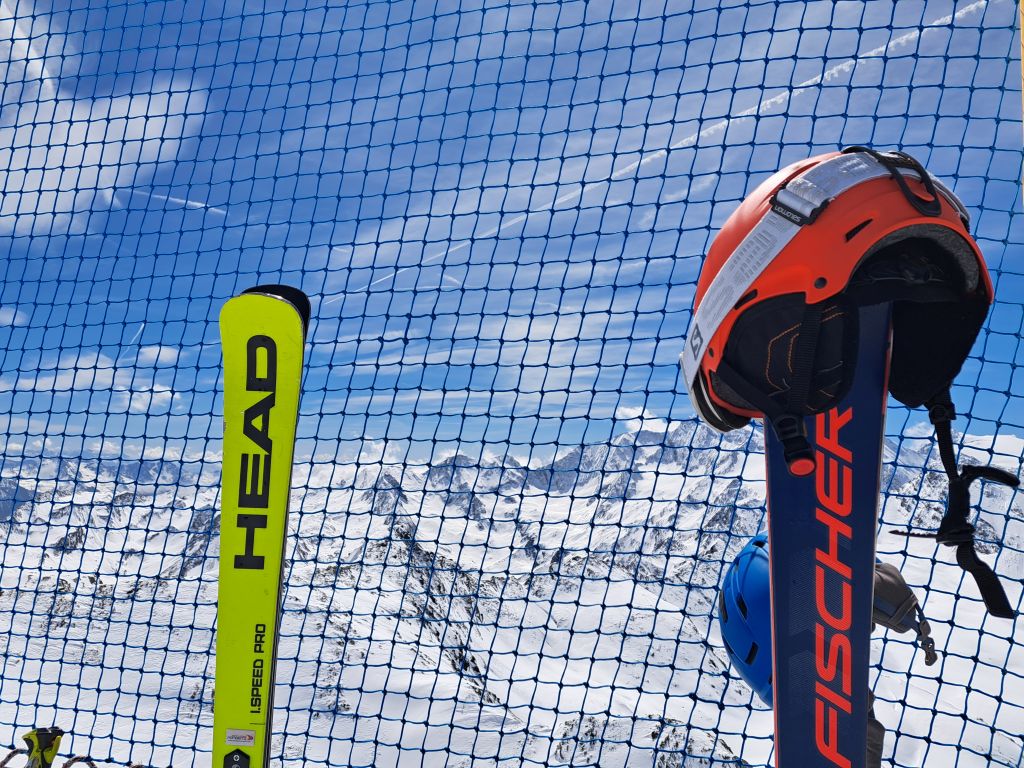
The Ötztal Valley connects Hannibal, James Bond and high-altitude ski challenges, peaking the interest of Ramy James Salameh who returned back to a landscape that also covets around 250 peaks over 3,000m.
At the entrance to the Ötztal Valley you will find a sign pointing towards ‘AREA47’, an eye-catching name and one that could easily be mistaken for a military training base for secret agents! It is, in fact, Austria’s largest outdoor adventure park; a thrill-seekers haven maybe even heaven, most definitely a training ground for adventurists and the odd professional ‘cliff diver’ courtesy of a 27m high dive-board, the centre-piece of a 20,000sqm swimming lake within Austria’s.
Area47 is the introduction to one of Austria’s most exhilarating valleys. One that is surrounded by about 250 peaks over 3,000 meters, offering relentless challenges for skiers and mountaineers, along with unexpected cloud‑top myths, legends and performances.
From James Bond to Hannibal
My challenge on returning to the Ötztal was to revisit Obergurgl‑Hochgurgl at the far end of the valley. It is within this resort I had some unfinished business: to ski the 5km descent from Top Mountain Star at 3,030m dropping 1,260m in elevation, to the Top Mountain Crosspoint Restaurant & Museum.
My previous visit during the Audi FIS Alpine World Cup in November 2024 left that glass‑walled bar a mere speck on Wurmkogel’s narrow ridgeline, a distant target Dominik, my instructor, had pointed out from a chairlift. This time around, I was determined to close the circle.
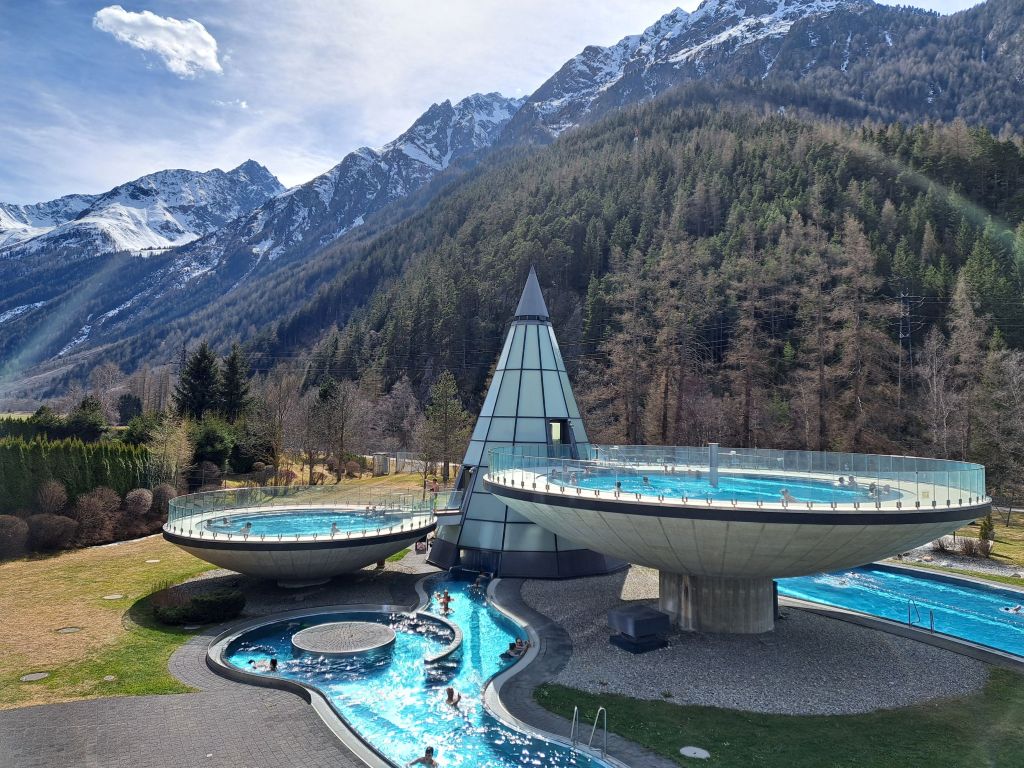
Before tackling Wurmkogel I based myself at Aqua Dome in Längenfeld, a thermal‑spa oasis whose warm pools and saunas became part‑training, part‑recovery routine after long days on Sölden’s slopes. Sölden stretches across 146km of piste, with two glacier areas and three peaks topping 3,000m all available for intrepid skiers.
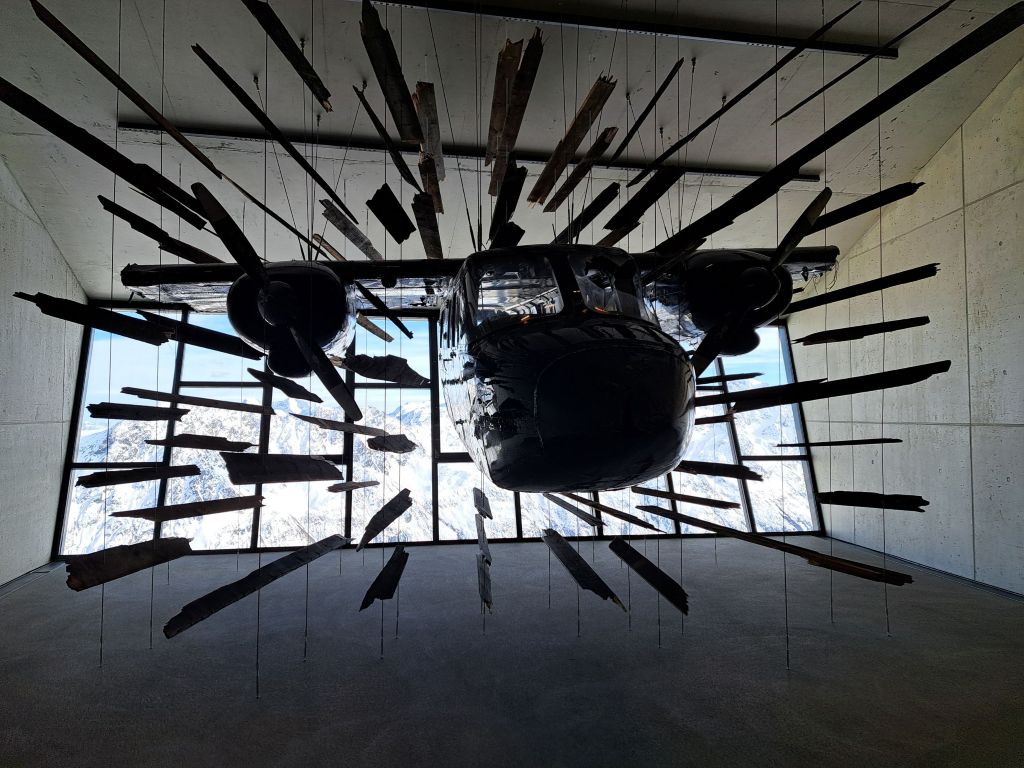
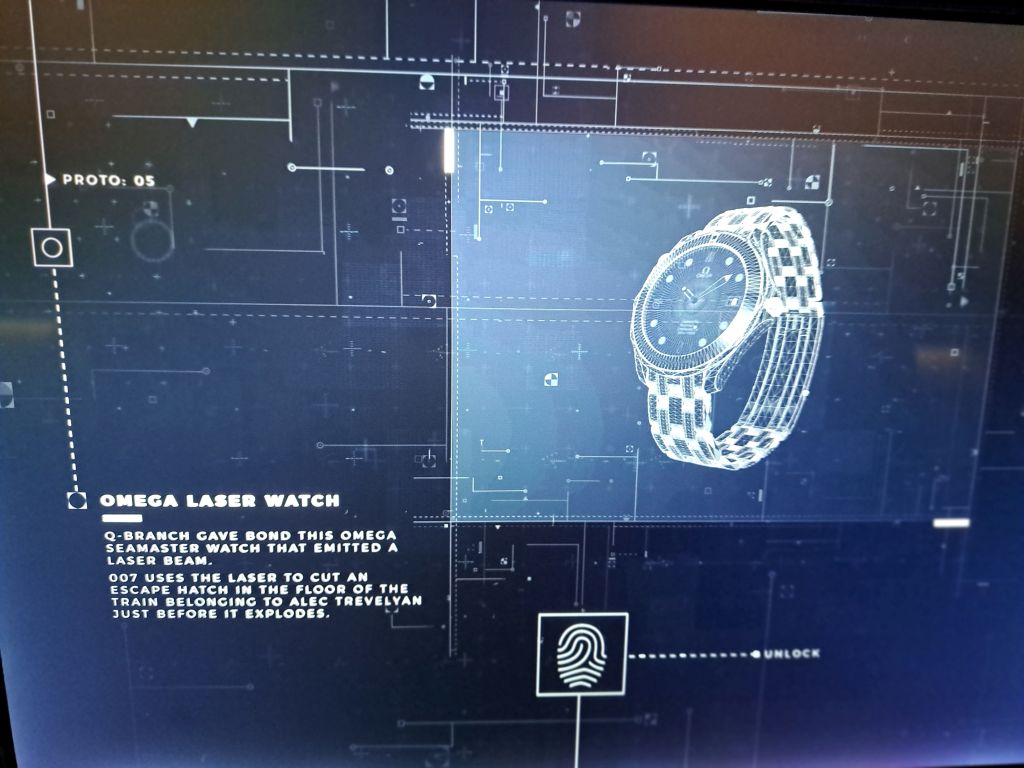
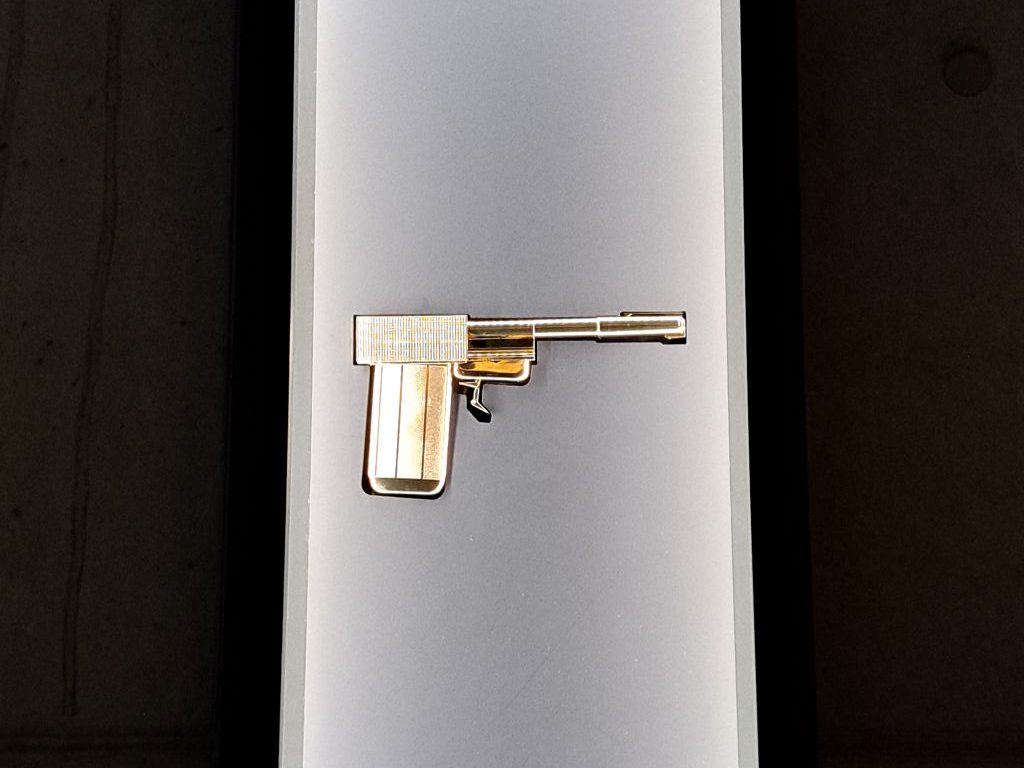
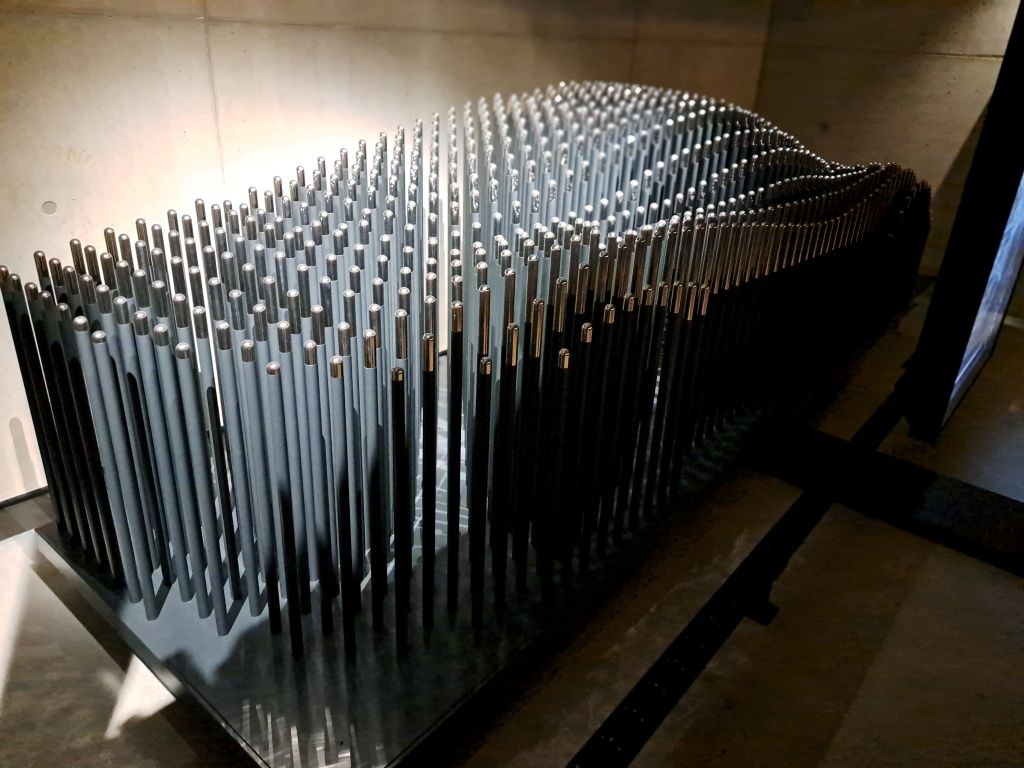
One summit, Gaislachkogl, wears its cinematic credentials proudly, here can be found 007 Elements exhibition and installation, a bunker‑like homage to James Bond with interactive displays and panoramic viewing platforms that frame the Rettenbach Glacier road where a high‑speed car chase in ‘Spectre’ was filmed.
Next door, ICE Q restaurant’s glass facade mirroring the jagged Ötztal skyline. Its claim to fame is was used as the ‘Hoffler Klinik’ in the movie. Ski piste no.30 begins on the Rettenbach and runs in part parallel to that road, offering a sweeping 15 km valley descent that feels cinematic in its own right.
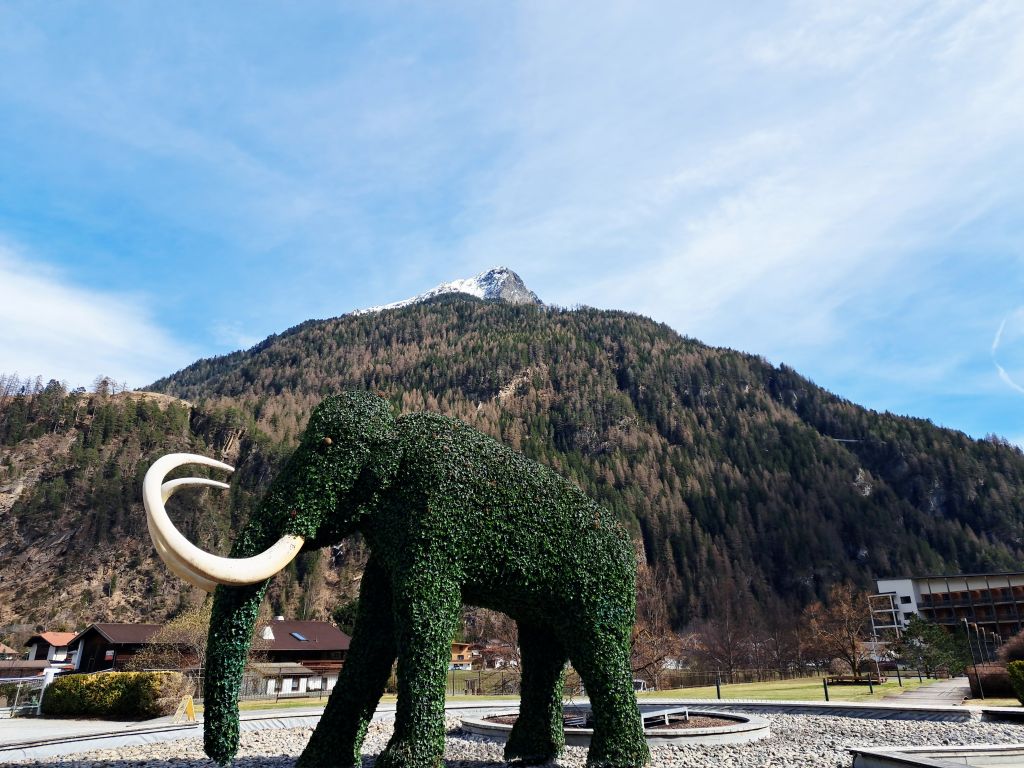
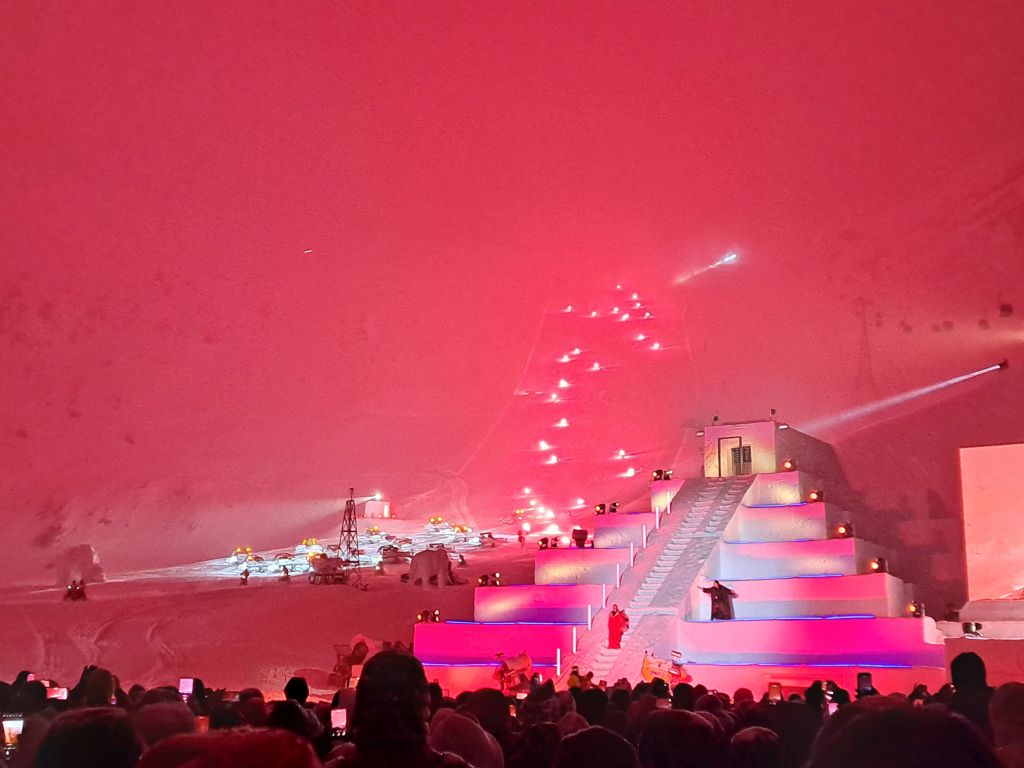
I timed my trip to catch the ‘Hannibal Glacier Spectacle’ on the Rettenbach Glacier; a modern, theatrical retelling of Hannibal’s 218 BC crossing that blends history with alpine mechanical pageantry. As dusk fell, a stepped ziggurat stage of compacted snow glowed under soft lights while flakes drifted down over 6,000 spectators.
A helicopter hovered, lowering a performer who like a rhythmic gymnast, acrobatically waved a banner in its downdraft; fireworks flared along the ridges; skiers descended with torches; motorbikes and snow‑mobiles punctuated the narrative; and a single file of snow‑groomers, their lights like a slow procession, evoked the steady march of elephants across the Alps. For a few breathless minutes the glacier became theatre, then retreated once more into its glittering, frozen silence.
Descending the Wurmkogel
Hochgurgl’s altitude guarantees late‑season snow and, on a bright day, the vistas more than lift the spirits, giving a sense that anything is possible. I followed a route recommended by Dave Ryding; firstly, a coffee at Hohe Mut Alm, perched at 2,670 m, from whose sun terrace a panorama of 21 three‑thousand‑metre peaks spreads like a cathedral of ice and rock. From there we traversed the resort by gondola, then rose on the Wurmkogel chairlift until the Top Mountain Star’s silhouette loomed above. This glass capsule clings to the ridge, offering a dizzying, 360‑degree outlook across the Ötztal Alps and even into the distant Italian Dolomites.
Manuel, my guide, traced the zig‑zagging line with a gloved finger and then I pushed off. The first kilometre demanded respect and trepidation; the narrow ledges and steep, compressed snow required tentative turns and laser focus. Beneath a sharply blue and sunny sky, moguls rose and fell like frozen waves. After the knifepoint sections the terrain opened into a broad, sun‑lit basin where I could widen my turns, letting the slope’s gradient and the valley’s geometry lengthen each carve and catch drifting panoramas in my peripheral vision.
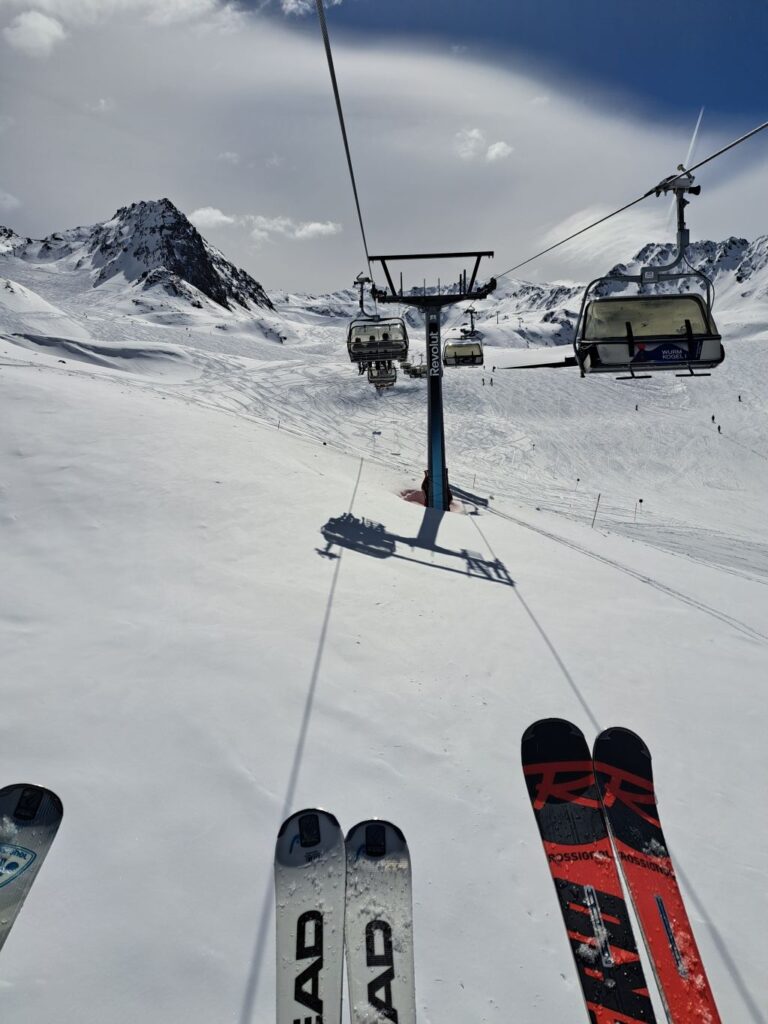
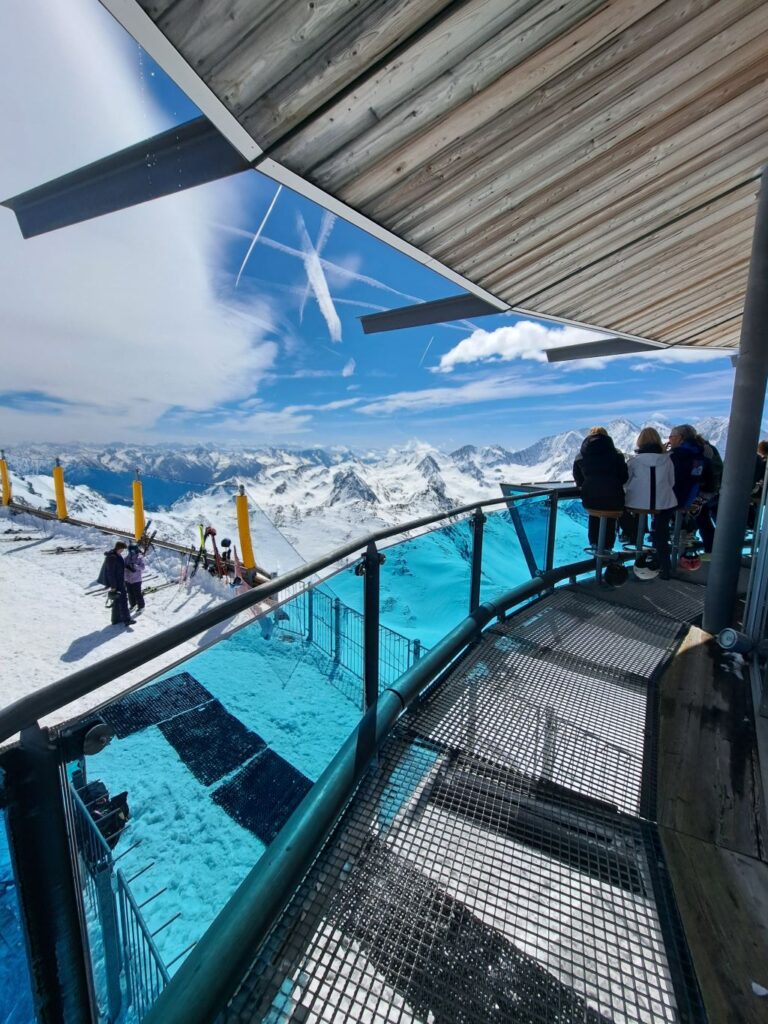
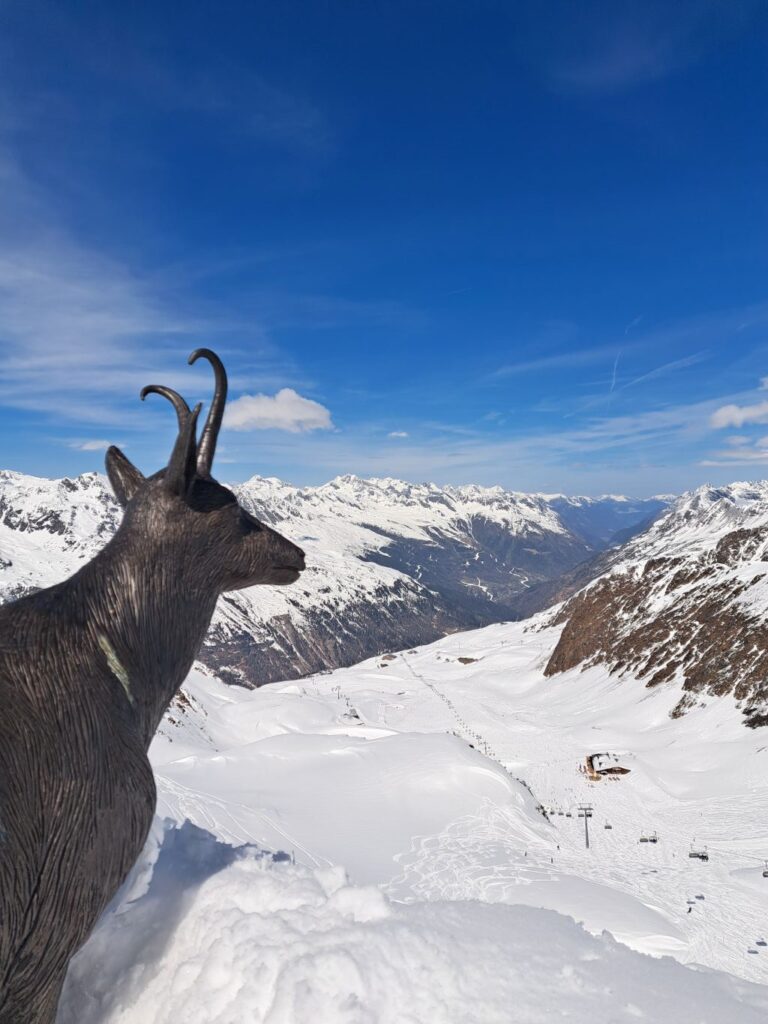
As I added a little speed to my run, I was able to consistently lift my head whilst I took long, rhythmical S‑turns allowed me to drink in the alpine theatre of serrated peaks. Soon, maybe even too soon, the sinuous roof of Top Mountain Crosspoint approached below me.
The Crosspoint itself is an architectural flourish of flowing exterior lines mirroring the mountains and concealed within it, a restaurant and one of the world’s best motorcycle museums, where vintage machines sit alongside modern bikes of incredible value.
Crossing the threshold into the Crosspoint felt celebratory. Warmth, coffee and the low murmur of fellow skiers replaced the thin, high hush at altitude. Descending from a speck on a ridge to the museum’s curated floors completed more than a personal to‑do list; it stitched together the Ötztal’s layers of glacier drama, cinematic echoes, restorative spas and pure high‑alpine skiing, into a single, satisfying arc.