
The Glasgow 2026 Commonwealth Games generated £223 million in economic activity across Scotland, including a £176 million boost for the Glasgow City Region, according to an independent impact evaluation of this summer’s event.
The 11-day Games, delivered for less than £160 million under a new hosting model, also generated £117.3 million in Gross Value Added (GVA) across Scotland.
The report highlights the economic, sporting, social and environmental benefits of hosting the Games using existing venues and infrastructure, offering a potential blueprint for future major sporting events.
Glasgow 2026 attracted one million people to its ticketed competitions, live sites, King’s Baton Relay and festival programme, while a global television audience of 510 million watched across 166 territories.
A total of 2,749 athletes from 74 Commonwealth nations and territories competed across 10 sports, setting six world records and 152 Commonwealth Games records.
The event also featured the largest Para sport medal programme in Commonwealth Games history, with 47 medal events across six sports.
Sustainable venues and economic legacy
The Games were staged using existing sporting facilities within an eight-mile corridor, reducing the need for new construction and helping organisers deliver the event within budget.
All competition venues were powered by renewable electricity tariffs for the first time in Games history, while 96% of temporary venue infrastructure was hired and all waste was diverted from landfill.
The Games also achieved ISO 20121 certification for sustainable event management.
An investment of £5.7 million across Scotstoun Stadium, Tollcross International Swimming Centre and Glasgow International Arena will provide a lasting infrastructure legacy.
The economic evaluation estimates that the Games supported 2,400 full-time equivalent years of employment, with accommodation, hospitality, retail, sport and professional services among the sectors benefiting.
Beyond the sporting competitions, community programmes reached all 32 Scottish local authorities. More than 131,000 people visited the Game On Live Site at Kelvingrove Park, while 4,000 volunteers contributed 156,000 hours.
Phil Batty, chief executive of Glasgow 2026, said: “Glasgow showed what can happen when you build a Games around the strengths of a place and the people who make it special.
“This report provides the evidence that we delivered great sport and a proud Glasgow welcome, while creating opportunities for people across Scotland to be part of something altogether brilliant.”
Commonwealth Sport said the Glasgow model could help future hosts develop more adaptable and financially responsible Games, ahead of the centenary edition in Amdavad, India, in 2030.
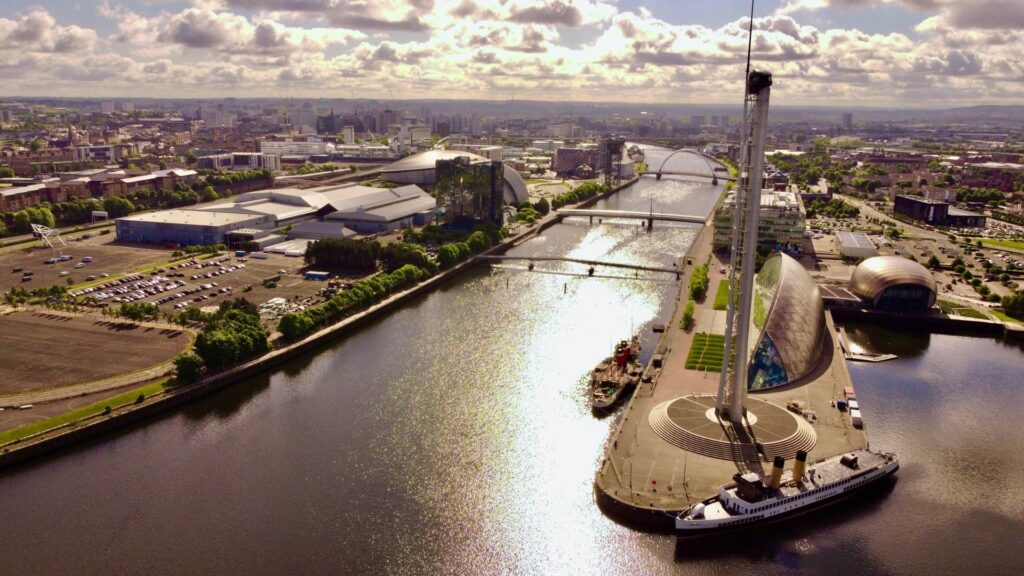
Image: Glasgow in Scotland (Photo by Stephen O’Donnell/Unsplash)