

England, Scotland, Wales and Northern Ireland have formally launched a joint bid to host the FIFA Women’s World Cup 2035, positioning the tournament as the biggest single-sport event ever staged on UK soil – and a potential blockbuster for sports tourism across all four nations.
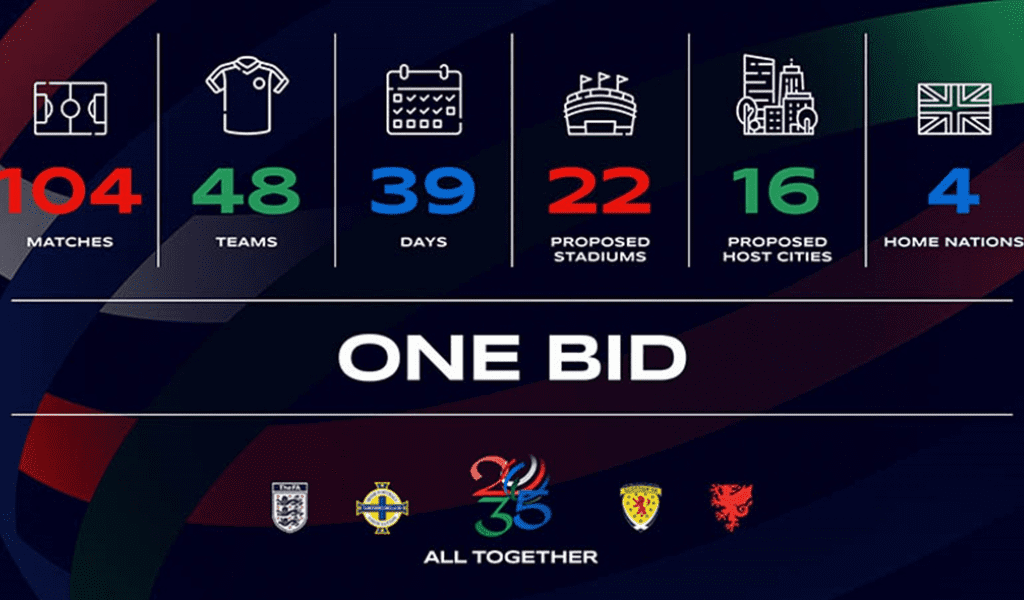
Under the “All Together” bid banner, the four football associations are proposing 22 stadiums across 16 host cities, with FIFA expected to trim that list to around 14-16 venues should the bid be successful. The tournament – expanded to 48 teams – would feature 104 matches over 39 days, with organisers targeting 4.5 million ticket sales and a global TV audience of 3.5 billion. It would also be the UK’s first World Cup since 1966, giving a new generation of fans the chance to experience a global finals on home turf.
A joint statement from the CEOs of the FA, Irish FA, Scottish FA and FA of Wales said: “Hosting the FIFA Women’s World Cup would be a huge privilege for our four home nations. If we are successful, the 2035 tournament will be the biggest single-sport event held on UK soil with 4.5 million tickets available for fans. We are proud of the growth that we’ve driven in recent years across the women’s and girls’ game, but there is still so much more growth to come, and this event will play a key role in helping us deliver that. Working together with FIFA, a Women’s World Cup in the UK has the power to turbo charge the women’s and girls’ game both in the UK and globally. Our bid also demonstrates our commitment to leaving a lasting legacy, in the run up to 2035, and the years afterwards. Together, we want to welcome the world to the UK to celebrate and enjoy an unforgettable tournament.”
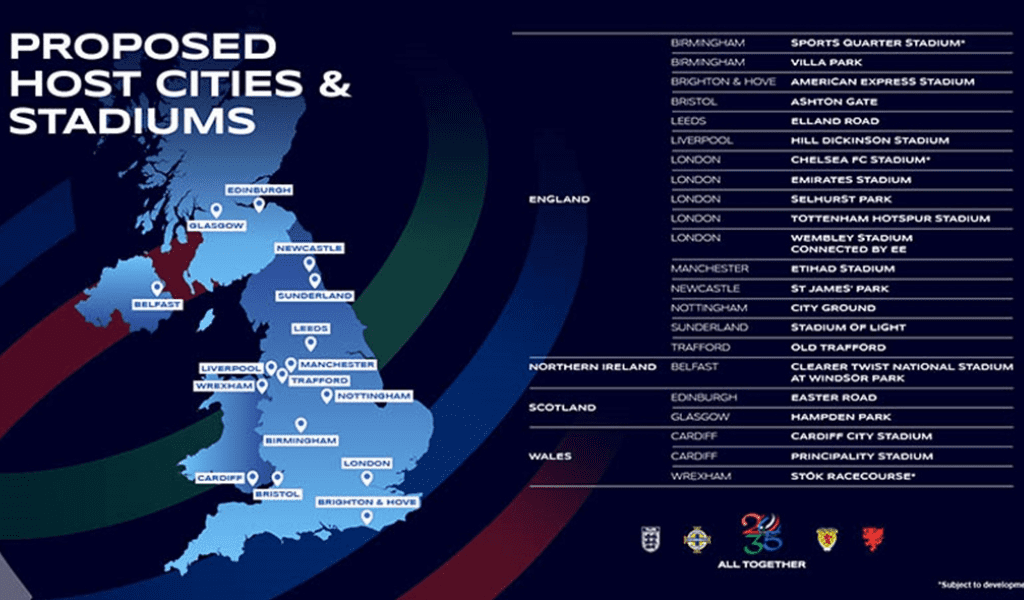
Proposed host cities and stadiums
The bid aims to put a World Cup venue within roughly two hours of 63 million people, dramatically widening access compared with previous women’s tournaments. The proposed line-up includes a mix of iconic arenas, redeveloped grounds and ambitious new builds:
- Belfast: The Clearer Twist National Stadium at Windsor Park
- Birmingham: The Sports Quarter Stadium (Birmingham City’s proposed new 62,000-seat home) and Villa Park
- Brighton: Amex Stadium
- Bristol: Ashton Gate
- Cardiff: Cardiff City Stadium and Principality Stadium
- Edinburgh: Easter Road
- Glasgow: Hampden Park
- Leeds: Elland Road
- Liverpool: Hill Dickinson Stadium
- London: Emirates Stadium, Selhurst Park, Tottenham Hotspur Stadium, Wembley Stadium and a future Chelsea stadium (or Stamford Bridge if redevelopment is delayed)
- Manchester: Etihad Stadium and a proposed 100,000-capacity new Old Trafford
- Newcastle: St James’ Park
- Nottingham: City Ground
- Sunderland: Stadium of Light
- Wrexham: a redeveloped SToK Racecourse
For sports travellers, that map reads like a ready-made football road trip – from Cardiff’s dual-stadium cluster to the North East’s passionate fan base in Newcastle and Sunderland, via London’s stacked line-up of elite arenas.
Economic impact: lessons from recent mega-events
While a full socio-economic impact study for 2035 is still being commissioned, comparable tournaments show how powerful the Women’s World Cup can be as an economic and tourism catalyst.
- UEFA Women’s EURO 2022 in England generated around £81m in economic activity across eight host cities and drove more than 552,000 day and overnight trips linked to matches.
- The 2023 FIFA Women’s World Cup contributed nearly US$1.9 billion to global GDP, according to a joint FIFA-WTO study, while Football Australia reported AUS$1.32 billion in economic impact for the host nation alone.
The UK bid is pitched as eight times bigger than Euro 2022 in terms of scale, with more matches, more host cities and a far greater ticket inventory. Even allowing for conservative assumptions, that points towards a multi-billion-pound boost once direct spending, wider supply-chain effects and longer-term tourism gains are factored in.
Crucially for policymakers, the tournament is designed to distribute that benefit widely: from hotel and hospitality sectors in smaller markets like Wrexham and Sunderland to major urban visitor economies in London, Manchester, Birmingham, Glasgow and Cardiff.
A sports tourism super-itinerary
From a sports tourism lens, the proposed 2035 World Cup feels tailor-made for inbound fans who travel to watch football and explore.
- Four-nation discovery: A single trip could combine group games in Wales or Northern Ireland with knockout matches in England or Scotland, encouraging multi-centre itineraries by rail or low-carbon coach.
- Iconic city breaks: London, Manchester, Glasgow, Cardiff, Newcastle and Liverpool are all seasoned city-break destinations with established tourism infrastructure, cultural draws and nightlife – ideal bases for fan festivals and viewing parties.
- Regional dispersal: Venues in Leeds, Nottingham, Bristol, Brighton and Wrexham open up less-visited regions, from the Yorkshire Dales and Peak District to the South Wales coast and rural North Wales, spreading visitor spend beyond the usual hotspots.
- Summer scheduling: With the bid targeting a June-July 2035 window, fans can pair matchdays with UK summer experiences – from Edinburgh festivals and Scottish Highlands hiking to beach escapes in Brighton or Gower.
For destination marketing bodies, that creates a huge storytelling opportunity: World Cup travel packages that bundle match tickets with rail passes, heritage attractions, music festivals and outdoor experiences – turning a “football trip” into a full UK and Ireland adventure (for Northern Ireland, combined with visits across the island via existing tourism partnerships).
Legacy and growth of women’s sport
The FA’s bid framework emphasises legacy across three pillars: participation, pathways into leadership and sustainable commercial growth for the women’s game. From a tourism perspective, that legacy translates into:
- New and upgraded venues that can host future major events, from Champions League finals to women’s club world competitions and multi-sport tournaments.
- Strengthened event-hosting reputations for secondary cities that successfully deliver World Cup matches, bolstering bids for everything from rugby and cricket to mass-participation running events.
- Repeat visitation: evidence from Euro 2022 and the 2023 World Cup suggests many visiting fans return later as general tourists, having first discovered host cities during the tournament.
If the bid is approved at the FIFA Congress in Vancouver in April 2026, the countdown to 2035 will effectively become a decade-long marketing runway for UK sports tourism – aligning domestic leagues, fan festivals, youth tournaments and cultural events around a single milestone: the first Women’s World Cup on home nations soil.
Images and graphics: TheFA.com